

The dua for evil eye protection is one of the most searched Islamic topics because many Muslims want a simple, authentic way to seek Allah’s protection from evil eye. In Islam, the evil eye is known as al-‘ayn or nazar, and it is understood as real in the Sunnah.
This article explores authentic Islamic guidance on protection from the evil eye, including common signs, and practical ways to seek Allah’s protection. If you are looking to protect yourself from the evil eye or nazar, or simply want to understand how Islam addresses the evil eye, this guide will help you approach it with clarity and faith.
What is Evil Eye (Nazar) in Islam?
Evil eye in Islam refers to harm that may come through jealousy, envy, or even excessive admiration directed toward a person, blessing, or success. In Islamic teachings, it is recognized as a real phenomenon rather than a superstition. The understanding is not that every compliment or expression of admiration causes harm, but that blessings should always be remembered with Allah and accompanied by prayers for barakah.
What are the Signs of Evil Eye in Islam?
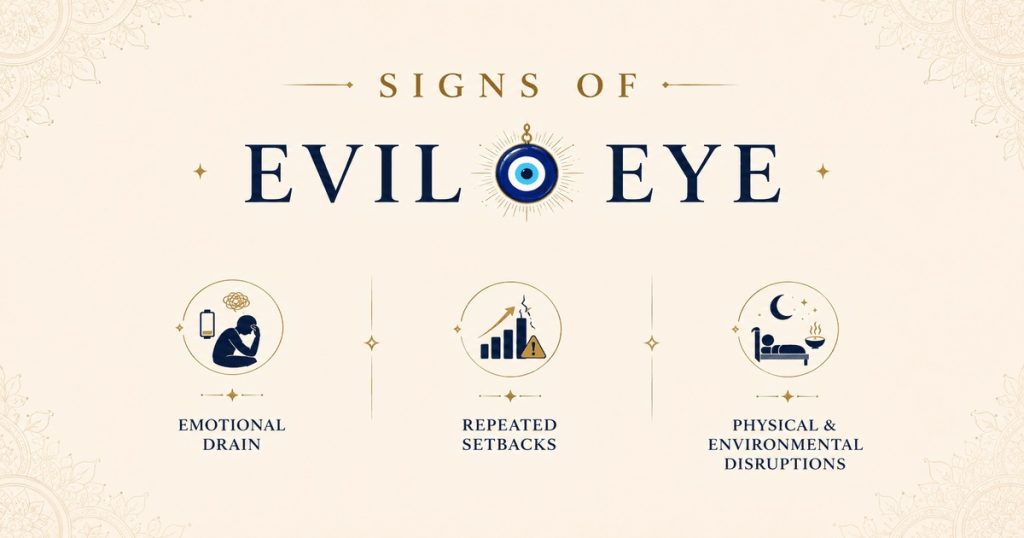
Here are three commonly discussed signs of evil eye that some people reflect on –
- Some people describe feeling constantly drained, unusually sad, anxious, restless, or lacking motivation even when there is no obvious cause.
- Some individuals notice repeated difficulties occurring in different areas of life after experiencing progress, happiness, or success.
- People sometimes mention experiencing disrupted sleep patterns, frequent tiredness, reduced appetite, or a feeling of unease at home.
What are the Powerful Duas for Evil Eye Protection?

The Prophet ﷺ taught several authentic duas for nazar that Muslims can recite regularly as a means of seeking Allah’s protection and peace of mind. The following supplications are among the most commonly recited for protection from nazar and unseen harm.
(i.) Dua For Nazar
Arabic:
أَعُوذُ بِكَلِمَاتِ اللَّهِ التَّامَّاتِ مِنْ شَرِّ مَا خَلَقَ
English translation:
“I seek refuge in the perfect words of Allah from the evil of what He has created.”
(ii.) Morning and Evening Dua for Evil Eye Protection
Arabic:
بِسْمِ اللَّهِ الَّذِي لَا يَضُرُّ مَعَ اسْمِهِ شَيْءٌ فِي الْأَرْضِ وَلَا فِي السَّمَاءِ وَهُوَ السَّمِيعُ الْعَلِيمُ
English translation:
“In the Name of Allah, with whose Name nothing can cause harm on earth or in the heavens, and He is the All-Hearing, the All-Knowing.”
(iii.) Surah Al-Falaq
Arabic opening:
قُلْ أَعُوذُ بِرَبِّ الْفَلَقِ
English translation:
“Say, ‘I seek refuge in the Lord of daybreak.’”
(iv.) Suraha An-Nas
Arabic opening:
قُلْ أَعُوذُ بِرَبِّ النَّاسِ
English translation:
“Say, ‘I seek refuge in the Lord of humankind.’”
Other Effective Ways to Seek Protection from Nazar –
Beyond reciting a dua for evil eye protection, Islam encourages believers to adopt daily practices that strengthen spiritual protection and reliance upon Allah. The following guidance highlights prophetic practices and the role of Ruqyah as part of a balanced Islamic approach to protection.
1. Prophetic Guidance on Avoiding and Countering Nazar
The Prophet ﷺ taught believers simple yet meaningful habits that help safeguard a person through remembrance of Allah, authentic supplications, and reliance upon Him.
(i.) Say “MashaAllah” when admiring something
When you admire a person, blessing, or achievement, remember Allah and say MashaAllah or invoke barakah instead of offering praise alone.
(ii.) Maintain morning and evening adhkar
Regular remembrance and daily supplications act as a spiritual shield and help seek Allah’s protection from harm.
(iii.) Seek Ruqyah when needed
Authentic Ruqyah based on the Qur’an and Sunnah is a permissible and recognized remedy for nazar.
2. Ruqyah for Evil Eyes

For many Muslims, Ruqyah in Islam is one of the first remedies they turn to when seeking spiritual relief and protection from the evil eye. Ruqyah involves reciting verses from the Qur’an and authentic supplications taught by the Prophet ﷺ as a means of seeking Allah’s help and healing.
While many people perform self-Ruqyah by reciting Qur’anic verses and duas on themselves, some may prefer guidance and support throughout the process. In such cases, platforms like Sukoon provide private Ruqyah sessions for individuals looking for a more structured and comfortable experience while staying grounded in authentic Islamic practices.
FAQs –
(i.) Is evil eye real in Islam?
Yes. Authentic hadith clearly state that the evil eye is real, and Islamic teachings provide protection through dua, Qur’an, and ruqyah.
(ii.) What is the best dua for evil eye protection?
A strong choice is A‘ūdhu bikalimāti-llāhit-tāmmāti min sharri mā khalaq, along with Al-Falaq, An-Nas, and the morning/evening protection duas.
(iii.) Can I recite a dua for nazar daily?
Yes. A daily dua for protection from nazar is encouraged as part of morning and evening adhkar, especially when combined with Surah Al-Falaq and Surah An-Nas.
Conclusion
In Islam, protection from the evil eye is not about living in fear—it is about strengthening your connection with Allah. Through authentic supplications, Qur’anic recitation, and daily remembrance, believers are given simple yet powerful ways to seek protection and peace of mind.
Whether through a dua for bad eye, protective verses from the Qur’an, or Ruqyah, the goal is not to become fearful of every hardship but to place trust in Allah’s protection.